
When to do a game drive, morning, afternoon, or evening?

“It’s knowing when to strike,” our guide says. A lion waits in the tall grass, patient and silent, aware that timing is everything. One wrong move, the prey is gone; one perfect leap, the hunt is successful. Safaris are no different. Your experience is not shaped by where you go but also by when you go for a drive – morning, afternoon, or evening? We discuss all that in this article.
Why does timing matter?
Because animal behavior changes throughout the day. Some animals are super active during certain hours of the day: some during the day, and others at night. Timing gives you the chance to see your favorite animals. Timing matters because conditions like temperature and light influences animal behavior. And lastly, the guides know when to drive to make the most out of your safari drive.
Morning game drive.
Morning drives start as early as dawn and go until a mild morning. You wake up after a friendly call or a gentle knock on the door, boost your body with Tanzania’s finest coffee, and put on a cold jacket (it’s chilly in the morning). The adventure begins with a peaceful drive through the vast wilderness.
Why drive in the morning? Imagine watching a lion or leopard finding its morning catch. You start the morning in style. Early mornings are perfect for witnessing big cats as they’re extremely active because it’s cool and there’s plenty of prey. Leopard sightings are quite rare after the heat sets in during the afternoon. Your morning drive can be a unique chance to watch these elusive creatures. What luck to watch a cheetah sprinting to catch an antelope.
Other animals to focus on are hyenas, jackals, and wild dogs. They are active to get their last kill before daylight comes in. And when it does, they find shady spots to rest until it is cool again later in the evening.
Herbivores are also actively grazing in the morning. Nocturnal grazers like hippos are returning from grazing fields to their homes – riverine pools. And you’ll see and hear a lot of birds singing their melodies to remind every creature that it’s another beautiful morning.
Morning drives are perfect for the best photographs. The sunrise paints the plains golden, creating a gorgeous backdrop sought after by avid wildlife photographers. What else? The fresh air, fewer crowds all offer unparalleled experience. The downside is that you’ll have to sacrifice your morning sleep, plus chilly mornings.
Pro tip: Pair your morning drive with a hearty breakfast. Or you can opt for a heart-pounding balloon flight concluded by champagne toast and a bush breakfast.
Afternoon game drive.
This drive usually begins after breakfast and can stretch into the evening—sometimes with a packed lunch along the way. On other days, you may return to the camp for lunch, take a short rest, and head back out for an evening drive. To be honest, many animals escape the midday heat by hiding under the shade or in burrows.
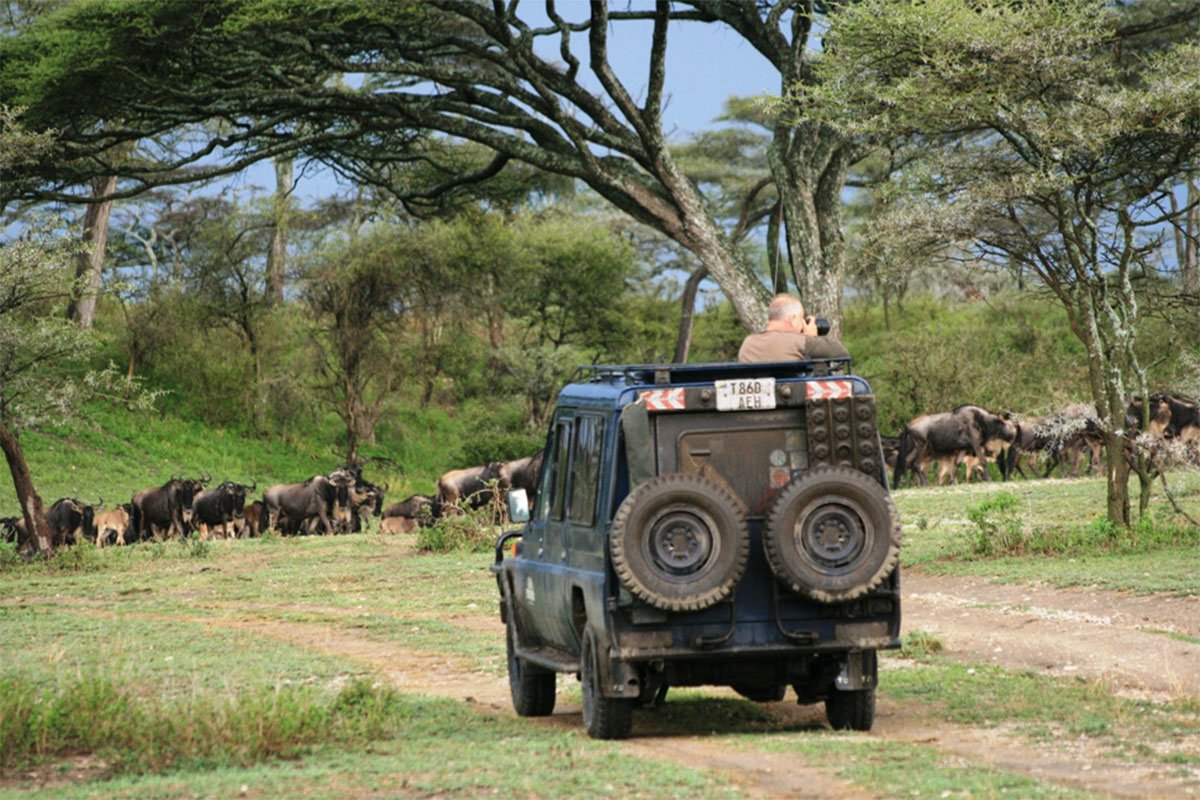
However, afternoons are perfect for spotting elephants, buffalo, giraffes, wildebeest, and zebras as they gather around water sources to quench their thirst. Another pro is that there’s enough light that allows you to scan animals from a distance. This is also a great time to take pictures, especially around water sources.
For the case of long drives, your driver will find a peaceful picnic site to open your lunch boxes. Enjoy lunch as a tower of giraffes walks with a confident stride a few meters from you. In case of short drives, you will be taken back to the camp for lunch.
Pro tip: We recommend long drives because you have the freedom to drive as far as you can. Whenever you feel your gut, tell your guide to stop. Short drives force you to be within the range of your camp.
Evening game drive.
As mentioned, this experience can be combined into a long afternoon drive that flows seamlessly into the evening. Some guests prefer having lunch at the lodge before finalizing the day with this much-needed game drive. The temperature has just cooled. High activity resumes. Herbivores stand again to graze, predators get out of their hideouts, and birds fly to their nests. As you drive, expect to bump a leopard carefully stalking its prey. Stay calm. Don’t disturb the scene. Grab your camera or binoculars silently and watch it chase the prey.
You may see nocturnal species preparing for a night shift. Hippos emerge as ghosts from the riverine pool, porcupines get out of their burrows, and fill the air with their eerie, echoing calls. You will also enjoy striking golden hour as the sun sinks into the African bush.
Pro tip: Conclude your tour with a sundowner. Enjoy cocktails and stories with your guides. Combine it with a candlelit dinner to elevate your safari experience.
Night game drive.
Night safaris, if the park permits, start at around 8:00 p.m. to 10:00 p.m. This is a unique opportunity to watch nocturnal animals, such as porcupines, jackals, lions, cheetahs, hyenas, and more. You’ll also watch the star-rich African sky under which the wildlife thrives. Most Tanzanian parks offer night game drives except the Serengeti and Ngorongoro Conservation Area.
Pro tip: Book 24 hours in advance. Slots may sell out early. And pack ready for the night and bugs (brought by the flashlight).
At Focus East Africa Tours, we offer unforgettable wildlife safaris to most Tanzanian parks. Our guides are trained personnel and pioneers of the African bush. Let’s craft your African adventure.

